
How Early to Start Piano Lessons and Nurture a Love for Music
Introduction
Every parent imagines the moment their child sits at the piano, pressing the first few notes with curiosity and excitement. Music feels like more than an activity. It feels like growth is unfolding.
Yet many families pause at the same question: how early to start piano lessons in a way that feels right for their child.
Starting too soon may overwhelm a child who is not developmentally ready. Waiting too long may mean missing a window when curiosity and coordination are naturally emerging. In Singapore, where enrichment is often part of childhood structure, piano remains one of the most popular first instruments. It provides creative balance alongside academic commitments.
This guide explores how to identify readiness, what age ranges work best, what long-term progression looks like, and how to nurture joy in a results-driven society. With thoughtful pacing and the right guidance, music becomes more than skill acquisition, it becomes a foundation for confidence.
Key Takeaways:
-
How early should piano lessons be for your child?
When considering how early to start piano lessons, the best timing depends on developmental readiness rather than a fixed age. Most children begin formal lessons between five and seven, while younger children may benefit from playful musical exploration first.
-
How do I know if my child is ready?
If you are wondering how early to start piano lessons, look for signs such as interest in music, the ability to focus for 10–15 minutes, emerging fine motor control, and enjoyment of repetition.
-
Will starting early make a long-term difference?
Yes. Families who reflect carefully on how early to start piano lessons often find that early foundations support coordination, listening skills, confidence, and steady progression over time.
-
What if my child is shy or unsure?
Piano can be especially supportive for shy children, offering personal expression and gradual confidence-building through small, encouraging performance opportunities.
-
How can piano fit into a busy Singapore school schedule?
Short, consistent practice sessions integrate smoothly into weekly routines. When thoughtfully paced, piano strengthens focus and time management rather than adding pressure.
-
Does my child need natural talent to succeed?
No. Consistency, encouragement, and supportive teaching matter far more than innate ability. Musical growth develops steadily with guidance and practice.
Understanding Musical Readiness in Children
What Age Is Best to Start Piano Lessons?
When parents wonder how early to start piano lessons for their child, they are often hoping for a single, definitive age. In reality, musical readiness develops along a spectrum rather than at a fixed point in time.
Children between four and five years old are usually best suited for pre-piano exploration rather than formal technical instruction. At this stage, lessons focus on rhythm games, listening activities, and playful keyboard discovery. Fine motor strength and hand coordination are still developing, so keeping expectations light helps children build comfort and curiosity without frustration. The emphasis remains on enjoyment and sound awareness rather than precision.
Between five and seven, many children become ready for formal lessons. Finger control improves, attention span lengthens, and they are better able to follow multi-step instructions. Sustained focus for around 15 minutes becomes manageable, making structured learning more effective. This is often the most common starting window, as developmental readiness aligns naturally with foundational skill-building.
Older beginners, aged eight and above, can also begin successfully. They may progress more quickly in note reading and conceptual understanding due to stronger cognitive development, though they may need reassurance if comparing themselves to peers who started earlier. With patient guidance and personalised pacing, confidence develops steadily.
Ultimately, engagement matters more than age. When deciding how early to start piano lessons, parents may find it helpful to look beyond numbers and focus on observable readiness signs. Families exploring a piano class for kids in Singapore often benefit from a short readiness assessment before enrolment, ensuring the timing feels natural, supportive, and developmentally appropriate.
Signs Your Child Is Ready
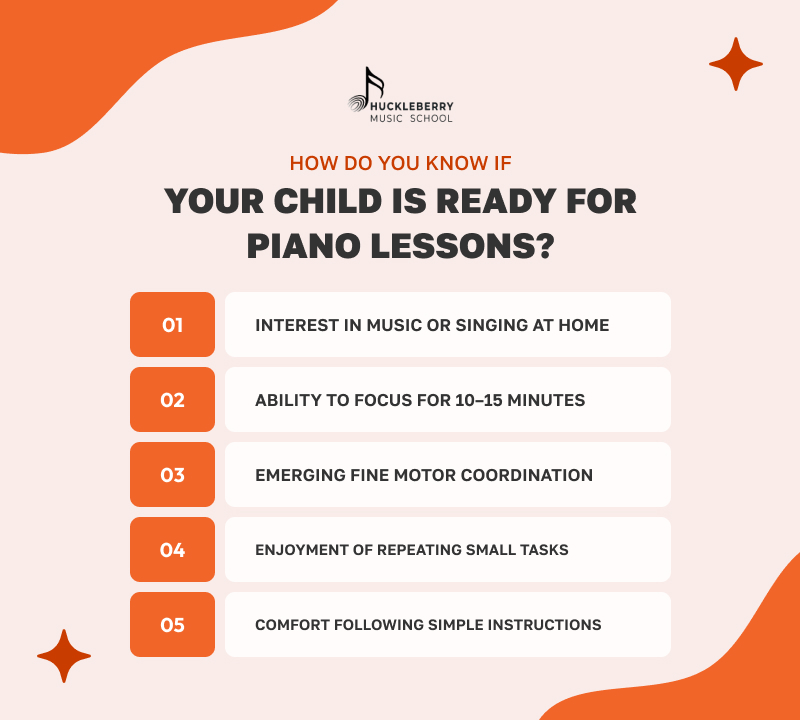
Musical readiness often reveals itself quietly in everyday life, especially when parents begin thinking about how early they should start piano lessons for their child.
A child who shows spontaneous interest in songs, hums melodies, or experiments with simple rhythms at home may already be developing musical awareness. Curiosity toward instruments, even toy keyboards, suggests openness to structured learning.
The ability to sit and focus briefly is another important sign. Piano lessons for young beginners are typically short and structured. If a child can concentrate for 10 to 15 minutes while following gentle instruction, they are likely ready to engage productively.
Fine motor coordination also plays a role. Pressing individual keys with controlled movement, rather than striking randomly, shows that hand strength and finger independence are emerging. These physical foundations support smoother technical development later.
Early pattern recognition is equally helpful. Children who can recognise simple counting sequences or repeat rhythmic patterns tend to adapt more comfortably to reading music and understanding tempo.
For families deciding on how early to start piano lessons, observing these readiness indicators often provides clearer guidance than focusing on age alone. At Huckleberry Music School, teachers assess these developmental markers through informal interaction before beginning lessons. Rather than relying solely on age benchmarks, they consider each child’s focus, coordination, and emotional readiness, ensuring that learning begins at an appropriate pace and confidence grows naturally from the very first lesson.
How Early Piano Learning Supports Development
.jpg)
Brain and Cognitive Growth
Music engages multiple neural systems at the same time. Reading notes, listening attentively, and coordinating fingers on the keys strengthen connections across different areas of the brain. This integrated activity supports memory, sequencing, and sustained attention in a natural and engaging way.
These benefits extend into daily learning without turning music into another academic demand. Instead, piano offers a structured yet creative experience that develops focus through expression rather than pressure.
In Singapore’s structured learning culture, this balance is especially valuable. Families exploring piano lessons often see music as part of holistic development, supporting growth without creating competition.
Emotional and Social Growth
Piano learning fosters patience and emotional expression. When children repeat a section until it improves, they practise persistence. When they perform in a supportive recital setting, they build courage gradually. At Huckleberry, performances are positioned as sharing milestones rather than competitive showcases. The aim is steady confidence, not comparison.
Discipline Without Pressure
Many parents think about discipline when deciding how early they should start piano lessons. Structure exists, but it is introduced gently. Weekly lessons provide rhythm. Short daily practice builds habit. Teachers frame mistakes as learning tools rather than failures. This approach cultivates resilience without anxiety.
What Long-Term Progression Looks Like
Parents are often thinking well beyond the first few months of lessons. While starting at the right time is important, understanding what the journey looks like over several years provides reassurance. Clear expectations reduce uncertainty and help families support steady, confident growth.
Year 1: Building Strong Foundations
In the first year of piano lessons, the focus is on establishing comfort, coordination, and understanding. For parents who have carefully considered how early to start piano lessons for their child, this stage often brings reassurance that steady, age-appropriate progress matters more than rapid advancement. Children learn how to sit with balanced posture and maintain a relaxed hand shape at the keyboard. These physical habits may seem simple, but they form the technical foundation that supports future fluency.
Students begin recognising basic notes on the keyboard and reading simple notation. Rhythm work introduces steady beats and straightforward patterns, helping children internalise timing. Listening becomes an active skill as they learn to notice tone quality, volume changes, and expressive markings.
By the end of the first year, many children are able to perform short pieces independently. The emphasis during this stage is not speed or complexity. It is confidence, understanding, and building positive associations with learning.
Years 2–3: Expanding Skills and Musical Awareness
As students move into their second and third years, their coordination strengthens and their musical vocabulary expands. For families who once wondered how early to start piano lessons, this stage often makes the value of steady foundations more visible. Hand independence improves, allowing children to manage more intricate patterns between left and right hands.
Rhythmic complexity increases gradually, introducing new note values and syncopated patterns. The repertoire becomes more varied, exposing students to different styles and moods. Reading fluency deepens as they become more comfortable navigating notation without hesitation.
At this stage, children begin to understand how technique supports expression. They explore phrasing, dynamics, and articulation with greater awareness. Rather than simply pressing the correct notes, they start shaping musical lines intentionally. Technique and expression begin to work together.
Beyond Year 3: Personalised Pathways
After several years of foundational development, progression becomes more individualised. For parents who once reflected carefully on how early to start piano lessons, this stage often affirms that thoughtful timing and steady pacing create lasting results. Some students may choose to pursue structured examination routes if they enjoy goal-based milestones. Others may focus more on expressive repertoire or performance opportunities that build stage confidence.
Advancement at this stage depends on readiness, interest, and long-term goals. Some children thrive on structured progression, while others prefer creative exploration. Both approaches are valid when guided thoughtfully.
This gradual roadmap reassures families that piano learning is developmental rather than rushed. Skills are layered progressively, confidence is built steadily, and growth reflects consistent effort over time rather than pressure for rapid achievement.
Choosing the Right Lesson Format
Selecting the right lesson format depends largely on your child’s temperament and learning style. Group classes often suit younger beginners who enjoy interaction, shared rhythm activities, and learning alongside peers. The social setting can make early lessons feel lively and encouraging, especially for children who gain confidence through participation.
Private lessons, on the other hand, provide customised pacing and more focused technical guidance. This format allows teachers to adjust instruction closely to a child’s strengths, challenges, and personal goals.
Families in Singapore exploring piano lessons for beginners often find that the decision is less about ability and more about personality. A child who thrives in group energy may flourish in a shared class, while one who prefers quiet concentration may benefit from individual attention. Choosing a format that aligns with your child’s natural disposition helps build confidence from the very beginning.
Practice Expectations by Age
Clear expectations around practice help families avoid unnecessary tension. When children understand what is manageable for their stage of development, practice feels achievable rather than overwhelming. The aim is consistency and quality, not long hours at the keyboard.
Ages 5–6
For younger beginners, short and focused sessions are most effective. Around 10 to 15 minutes of daily practice is usually sufficient. At this stage, parental guidance plays an important role. Sitting nearby, offering gentle reminders, and helping organise simple tasks creates structure and reassurance. Practice may include reviewing a short piece, clapping rhythms, or identifying notes. The goal is to build familiarity and a positive routine rather than technical intensity.
Ages 7–9
As children grow, their attention span and hand coordination improve. For parents who previously considered how early to start piano lessons, this stage often highlights how early foundations support increasing independence. Practice can gradually extend to 15 to 25 minutes a day, depending on the child’s focus and workload. Independence begins to develop naturally, and parents may step back slightly, allowing the child to attempt sections on their own before offering support. During this phase, children learn to break music into smaller parts and work through minor challenges independently. Confidence grows steadily when responsibility increases in a gentle and supported way.
Ages 10 and Above
Older students are often ready for longer, more structured sessions. For families who once reflected on how early to start piano lessons, this stage demonstrates how early readiness decisions support long-term independence. Practice becomes more intentional, with clearer weekly goals. Students learn to identify difficult passages, refine dynamics, and monitor their own progress. Personal goal-setting encourages ownership of learning. Rather than practising simply because they are told to, they begin to understand how focused effort leads to measurable improvement.
Across all age groups, expectations evolve gradually. Increases in duration and complexity should feel like a natural extension of growth, not a sudden leap. When practice develops step by step, children build discipline alongside enjoyment, maintaining a healthy relationship with music as they mature.
Creating the Right Home Environment
Setting Up in Singapore Homes
Many families live in apartments where space and noise must be considered. A digital keyboard with weighted keys and headphone capability works well for beginners.
Place the instrument in a shared area to encourage spontaneous interaction. Visibility often increases engagement.
Encouragement Without Pressure
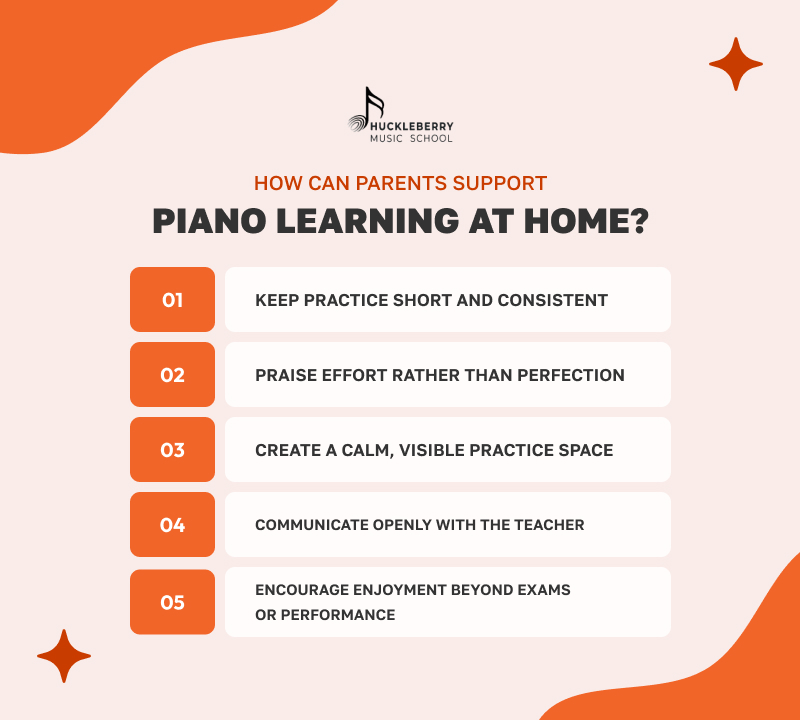
Sit nearby during early practice. Offer praise for effort, not perfection. Ask reflective questions that promote ownership.
As children mature, gradually step back while maintaining interest.
Some families choose to deepen their child’s understanding later through music theory lessons, helping them connect notation to performance in a more meaningful and confident way.
Making Music Part of Daily Life
Play diverse genres at home. Attend family-friendly performances when possible. Encourage siblings to experiment together. Music flourishes when it feels natural, not imposed.
Frequently Asked Questions
-
Is There Such a Thing as Starting Too Late?
No. While early exposure can support coordination and familiarity, older beginners often progress quickly because they have stronger cognitive skills and longer attention spans. For families still wondering how early to start piano lessons, it is reassuring to know that musical growth depends more on consistency, interest, and supportive teaching than on beginning at a very young age.
-
Should We Buy an Acoustic Piano Immediately?
A weighted digital keyboard is more than sufficient for beginners, especially in homes where space and volume control are considerations. It allows children to develop proper finger strength and technique while keeping practice manageable. When deciding how early to start piano lessons, families do not need to make large equipment investments immediately. An acoustic piano can be considered later if interest remains strong and commitment deepens over time.
-
Does My Child Need Natural Talent?
Natural talent is not a requirement for success in piano. Consistency, encouragement, and patient guidance matter far more. With steady practice and thoughtful teaching, children gradually build skill, confidence, and musical understanding, regardless of their starting point.
-
How Can Piano Be Balanced With School Commitments in Singapore?
Piano lessons should feel enriching rather than overwhelming. For younger children, 10 to 15 minutes of focused daily practice fits naturally into weekly routines, with duration increasing gradually as they grow. When parents consider how early to start piano lessons, it is helpful to remember that music, when paced thoughtfully, often strengthens focus, discipline, and time management instead of competing with academic responsibilities.
-
What If My Child Is Shy?
Shy children often thrive at the piano because it offers personal expression without immediate social pressure. With small, supportive recital settings at Huckleberry Music School, confidence develops gradually, allowing children to share their progress in a calm and encouraging environment.
-
What If My Child Loses Interest or Wants to Quit?
Motivation can fluctuate, especially during busy periods. Teachers may adjust repertoire, introduce familiar pieces, or modify pacing to renew engagement. Open communication ensures lessons remain supportive and flexible, and families may begin with a piano trial lesson to observe comfort levels before making a long-term commitment.
Conclusion
The question of how early to start piano lessons is ultimately about readiness, temperament, and environment.
When introduced thoughtfully, early piano learning strengthens coordination, focus, resilience, and emotional awareness. At Huckleberry Music School, lessons are carefully paced, student-centred, and progress-focused rather than performance-driven. With supportive teachers and encouraging parents, children do not simply learn to play the piano. They develop a lasting relationship with music, built on curiosity, confidence, and joy.
Arrange a trial lesson to experience Huckleberry Music School’s warm and structured approach firsthand.